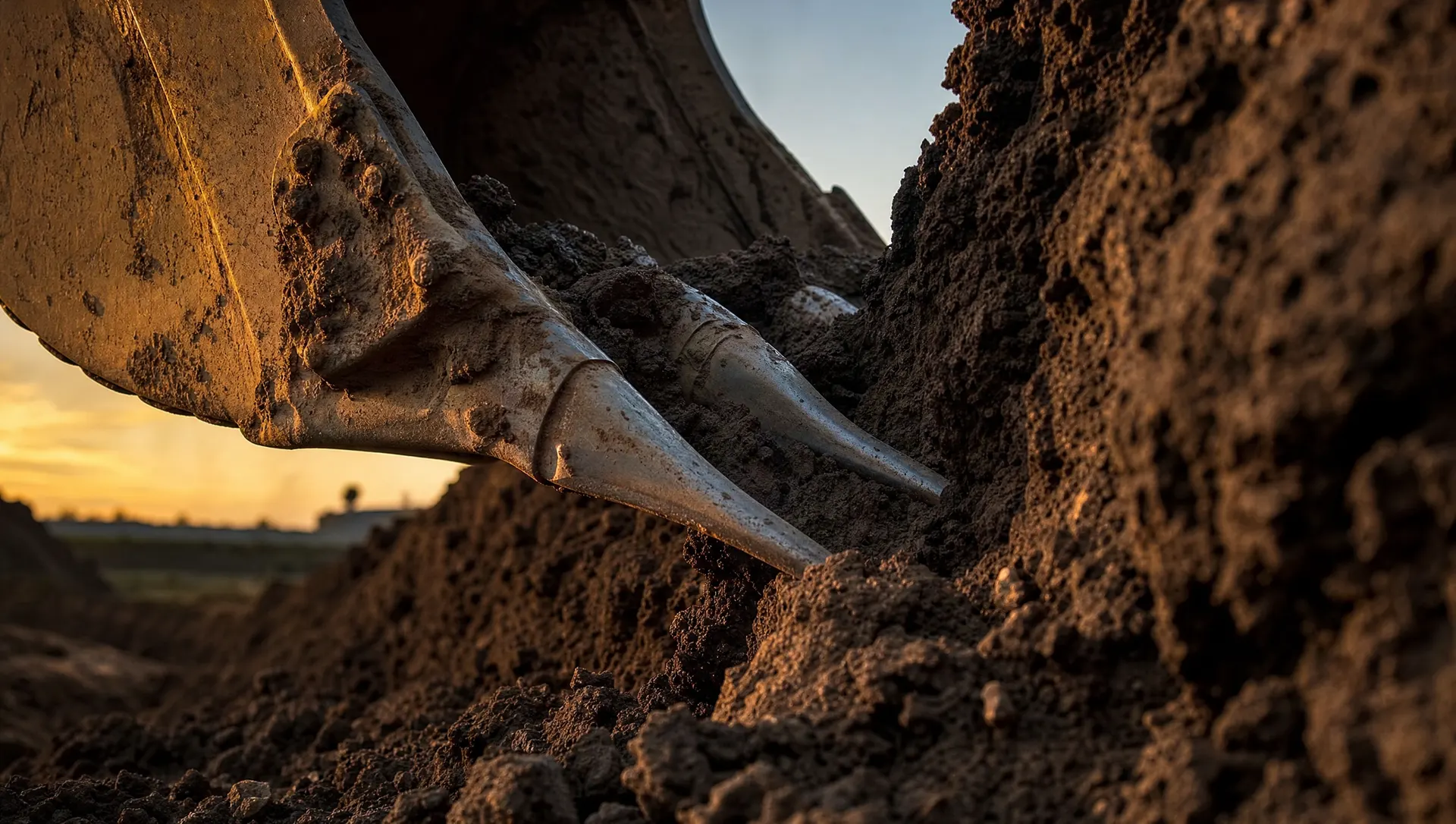
Trenching & Utility Lines in Wentzville, MO
Running water to a new shop. Getting power out to a detached garage. Tying a new home into the sewer main. Almost every one of those jobs starts the same way — a trench, dug to the right depth and the right line, so the pipe or conduit inside it does its job for the next several decades without a problem. Wentzville Excavation digs utility trenches for water, sewer, electric, and other underground lines across Wentzville and St. Charles County.
Trenching sounds like the simplest excavation work there is, and in some ways it is — but depth, slope, and knowing exactly what else is already buried nearby are what separate a trench that works from one that causes a problem six months later.
What Trenching & Utility Work Includes
Trenching jobs vary by what's going in the ground, but generally cover:
- Water line trenches, from a meter to a house or from a house out to a shop, barn, or second structure
- Sewer line trenches, dug to the fall required to keep waste moving by gravity
- Electrical trenches for underground service runs, typically to a manufacturer's required depth for conduit
- Drain line trenches connecting downspouts, sump pumps, or French drains to a discharge point
- Trenches for irrigation lines, low-voltage lines, or other utility runs bundled into one project
- Backfilling and compacting the trench once the line is inspected and in place
- Locating and working carefully around existing utilities already in the ground
Most trenching jobs get scoped alongside another trade — a plumber running the actual pipe, an electrician pulling the conduit — so timing and coordination matter as much as the digging itself.
Utility Locates Come First, Every Time
Before any trench gets dug, the existing utilities on the property need to be located and marked. That means calling 811 (Missouri One Call) ahead of the job, every time, regardless of how confident anyone is about what's down there. Utility companies send crews out to mark the location of gas, electric, water, and communication lines with flags or paint, and the law requires that marking happen before excavation starts. It's free, it protects the crew doing the digging, and it protects you from an accidental hit that turns into a much bigger repair than the trench itself. We build this step into every trenching job as a matter of course — see our FAQ page for more on how the locate process works.
Trenching Around Wentzville's Growth
A lot of the trenching work around Wentzville right now is tied to new construction — new subdivisions need water, sewer, and electric run to every lot, and new outbuildings on existing properties need their own utility runs added after the fact. That second category is common here: a homeowner on an established property decides to add a shop, a barn, or a detached garage, and now needs water and power run a hundred feet or more across the yard.
The clay-heavy soil across St. Charles County affects trenching too. Clay holds a trench wall reasonably well when it's dry, but wet clay can slump into an open trench and needs more careful handling. It also means bedding material under a pipe matters — clay alone doesn't always give a pipe the stable, well-drained base it needs, so trenches often get a layer of appropriate bedding material before the line goes in.
When to Call for Trenching Work
Trenching is the right call for:
- Running water, sewer, or electric to a new structure — a shop, barn, garage, or addition
- Connecting a new home to utility mains during construction
- Replacing a failed underground line that needs to be dug up and re-run
- Installing drain lines for downspouts, sump pump discharge, or French drains
- Any project where a line needs to go underground instead of running overhead
If the goal is broader drainage work — moving surface water off a property rather than running a specific utility line — that's more likely drainage and erosion control, though the two overlap on drain line projects.
What Trenching Typically Costs
Trenching cost typically comes down to length, depth, and soil conditions, plus what has to happen around existing utilities. A short, shallow trench in open ground costs a lot less than a long run that has to navigate around a driveway, existing landscaping, or other buried lines. Factors that typically affect price:
- Total length and required depth of the trench
- Soil conditions — rocky or heavily compacted ground takes longer to dig
- How many existing utilities are nearby and need to be worked around
- Whether bedding material is needed under the pipe
- Restoration of the surface afterward — lawn, gravel, or driveway repair
We give a real number after seeing the run and confirming utility locates, since a trench that looks straightforward on the surface can turn up surprises once locates come back.
How deep does a utility trench need to be?
Depends on the utility. Water lines typically need to sit below the local frost depth to avoid freezing. Electrical conduit depth is usually set by code and by what the utility provider or electrician specifies. Sewer lines are dug to whatever depth and slope gets proper fall for gravity drainage. We dig to the depth your plumber, electrician, or the utility company specifies.
What if you hit another utility line while digging?
This is exactly what the 811 locate process is meant to prevent. Marked lines get hand-dug around or otherwise handled carefully once we know they're there. It's a rare problem on a properly located site — which is exactly why the locate call happens before any digging, without exception.
Can you dig a trench through an existing driveway or lawn?
Yes, and we'll talk through the restoration plan before starting — whether that's gravel repair, replacing a section of driveway base, or reseeding a lawn area once the trench is backfilled and compacted.
Get a Quote on Your Trenching Project
Tell us what needs to run underground and where, and we'll get back to you fast with a free, straight quote.
Planning Dirt Work in Wentzville?
Tell us about the project and we'll get back fast with a free, no-pressure quote.